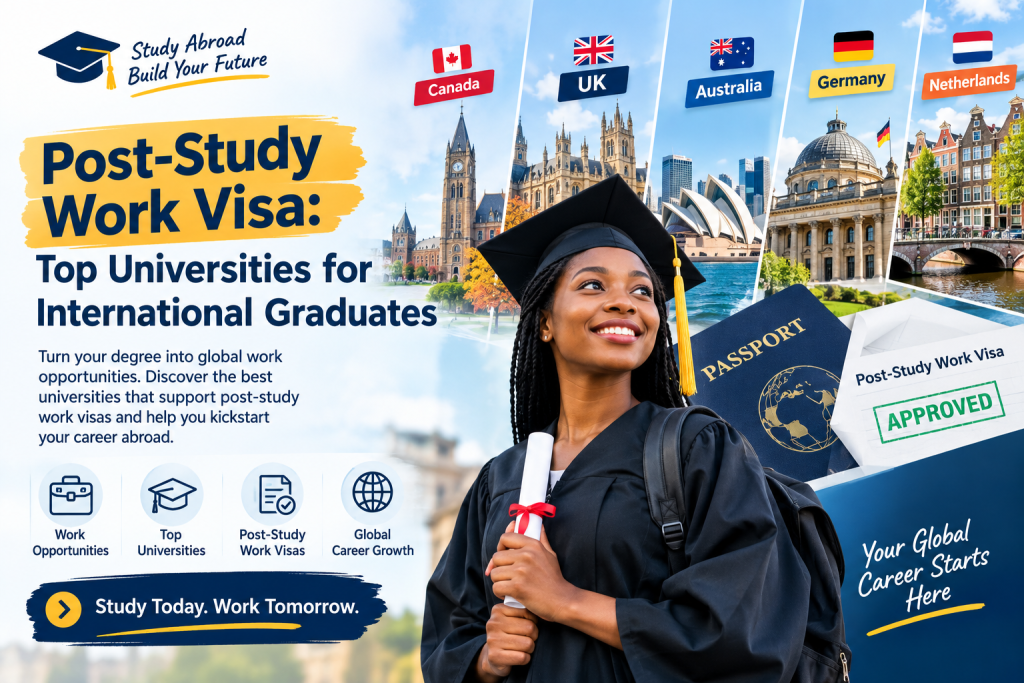
Post-Study Work Visa Opportunities: Top Universities That Can Help Launch Your Global Career
Picture yourself earning a degree from a world-class university and then seamlessly transitioning into a professional career in the same country? Picture yourself walking across the graduation stage, diploma in hand, knowing that your journey doesn’t end there—it’s only the beginning. For many international students, the ultimate goal is not just obtaining a prestigious qualification but also gaining valuable international work experience that can transform their future.
If you’re researching post-study work visa top universities, you’re already thinking strategically about your education and career. In today’s competitive global job market, choosing a university that offers both academic excellence and strong post-graduation work opportunities can significantly increase the return on your investment and open doors to long-term success.
Studying abroad requires commitment, planning, and financial resources. That’s why many students are now looking beyond university rankings and focusing on countries and institutions that provide clear pathways from education to employment. The combination of a respected degree and access to post-study work visas can give graduates the opportunity to gain real-world experience, build professional networks, enhance their resumes, and, in some cases, even create pathways toward long-term residency or permanent settlement.
The good news is that several of the world’s most popular study destinations—including Canada, Australia, New Zealand, the United Kingdom, Germany, and other international education hubs—have developed post-study work programs designed to attract talented graduates from around the world. These opportunities allow students to stay after graduation, seek employment, gain industry experience, and contribute their skills to growing economies.
However, not all universities offer the same advantages. Some institutions have stronger employer partnerships, higher graduate employment rates, better internship opportunities, and locations within thriving economic centers where graduates can access a wider range of career opportunities. Choosing the right university can significantly influence your chances of securing employment after graduation and maximizing your post-study work visa benefits.
Whether you’re pursuing engineering, information technology, healthcare, business, finance, data science, artificial intelligence, or other high-demand fields, selecting a university with a proven track record of graduate success can position you for exceptional career outcomes.
In this guide, we’ll explore the top universities known for supporting international students, highlight countries with favorable post-study work visa policies, and examine the factors that can help you move from the classroom to a successful international career. You’ll discover how to identify universities that not only deliver outstanding education but also provide the practical pathways needed to turn your academic achievements into professional success.
If your goal is to study abroad and build a successful future beyond graduation, you’re in the right place. Let’s explore the universities and destinations that can help make that dream a reality.
Why Post Study Work Visa Top Universities Matter
Graduating is exciting, but what comes next is what truly shapes your future. Post study work visa top universities stand out because they not only deliver excellent education but also position you in countries with generous work rights. These visas let you gain local experience, build networks, and often pave the way for permanent residency.
In today’s competitive job market, hands-on experience abroad makes your resume shine. Many students return home with advanced skills or stay to build long-term careers. With evolving policies in 2026, choosing the right university can mean the difference between struggling to find work and hitting the ground running.
Top Countries Offering Strong Post-Study Work Options
Several destinations lead the pack for international students seeking work after graduation. Here’s what makes them special:
- Canada: Up to 3 years with the Post-Graduation Work Permit (PGWP), strong pathways to permanent residency.
- Australia: 2–4 years Temporary Graduate Visa, depending on your qualification and location.
- United Kingdom: 2-year Graduate Route (3 years for PhD), flexible work in any field.
- New Zealand: Up to 3 years post-study work visa for many graduates.
- Germany: 18-month job seeker visa, followed by strong employment options.
These countries host many of the post study work visa top universities that combine academic prestige with practical opportunities.
Leading Post Study Work Visa Top Universities
Many globally ranked institutions shine when it comes to post-study outcomes. Universities like MIT, University of Toronto, and University of Melbourne consistently produce graduates who benefit from excellent visa policies and high employability.
Key highlights:
- Institutions in Canada and Australia often lead in practical, industry-linked programs.
- UK and European universities emphasize research and global networks.
- Strong alumni outcomes and career services help secure jobs during the post-study period.
Comparison Table: Post Study Work Visa Top Universities by Country
To make your decision easier, here’s a helpful overview of standout universities and their associated post-study benefits:
| University | Country | Global Rank | Post-Study Work Visa Duration | Key Strengths for Graduates | Best For |
|---|---|---|---|---|---|
| University of Toronto | Canada | Top 25 | Up to 3 years (PGWP) | Strong PR pathway, tech & healthcare jobs | Career settlers |
| University of Melbourne | Australia | Top 40 | 2–4 years | High employability, vibrant cities | Work-life balance |
| Imperial College London | UK | Top 5 | 2–3 years Graduate Route | STEM excellence, global networks | Research & innovation |
| University of Auckland | New Zealand | Top 100 | Up to 3 years | Quality lifestyle, growing opportunities | Adventure seekers |
| ETH Zurich | Switzerland | Top 10 | Job seeker permits | Engineering focus, high salaries | Technical fields |
This table shows how post study work visa top universities balance rankings with real-world advantages.22
Academic Excellence Meets Career Readiness
The best post study work visa top universities excel in fields like STEM, business, healthcare, and sustainability. Programs often include internships, co-ops, and industry partnerships that prepare you directly for the job market.
Smaller class sizes and diverse student bodies help you develop soft skills like cross-cultural communication—highly valued by employers worldwide.
Application Process and Visa Tips
Securing admission to these universities is competitive but doable with preparation.
Steps to follow:
- Research programs aligned with your career goals.
- Prepare strong applications with good grades, English tests (IELTS/TOEFL), and personal statements.
- Apply for scholarships early to reduce financial stress.
- Understand visa requirements specific to each country.
Once admitted, focus on maintaining good academic standing, as this often affects post-study visa eligibility.
Financial Aspects and Scholarships
Tuition and living costs vary, but many post study work visa top universities offer funding options. Part-time work during studies and full-time opportunities afterward help offset expenses.
Look for merit-based awards, country-specific scholarships, and university funding for international students. Graduates often recover their investment quickly through higher salaries abroad.
Life as a Student and Beyond
Studying at these institutions means more than lectures. You’ll enjoy vibrant campus life, cultural experiences, and support networks designed for international students.
After graduation, the post-study visa period lets you explore careers, travel within the country, and decide your next steps—whether staying longer or returning home with enhanced credentials.
Practical tips for success:
- Network aggressively through career fairs and alumni events.
- Gain relevant work experience during your studies.
- Stay informed about policy changes that could affect visa extensions.
- Build a professional online presence (LinkedIn) early.
Challenges and How to Overcome Them
It’s not always smooth sailing. Competition for jobs, cultural adjustment, and visa uncertainties can arise. However, universities with strong international offices provide guidance, and many graduates say the experience is worth every challenge.
Focus on adaptability and resilience—these qualities will serve you well during the post-study phase.
Getting Started on Your Post Study Work Visa Journey
Ready to explore? Start by identifying your field of interest and preferred destination. Compare programs, reach out to admissions teams, and connect with current students or alumni.
For the latest official rankings and employability insights, visit: https://www.topuniversities.
And for detailed visa comparisons across countries, check this comprehensive guide: https://www.study-abroad.org/
Final Thoughts: Choosing the Right University for Post-Study Work Opportunities
Choosing a university abroad is about much more than finding a prestigious name and securing an admission letter. If your long-term goal is to study, gain international experience, and build a career abroad, then post-study work opportunities should be part of your decision from the very beginning.
The best universities for post-study work opportunities can give you more than a respected qualification. They can provide a launchpad for your professional future by combining strong academics, industry connections, career support, practical experience, and access to countries where international graduates may have opportunities to gain work experience after completing their studies.
For many international students, especially students coming from Africa, this can make a major difference.
You are not simply investing in a degree. You are investing in the next several years of your life.
That means your decision should go beyond asking, “Which university has the highest ranking?”
Instead, ask:
“Which university and country give me the strongest overall opportunity to achieve my academic and career goals?”
That question can lead you to a much smarter decision.
Think Beyond the Admission Letter
Receiving an offer from a top university can feel like the ultimate achievement, but it is only the beginning.
Before accepting an offer, investigate what happens after graduation. Look at the country’s current post-study work rules, the type of work graduates can pursue, how long eligible graduates may remain after completing their studies, and whether the rules align with your long-term plans.
Immigration policies can change, sometimes significantly, so never rely solely on information from an old blog post, social media video, or advice from someone who graduated several years ago.
Always verify the latest requirements through official government and university sources before making a major financial decision.
At the same time, remember that a post-study work visa does not automatically guarantee employment.
You still need skills.
You need experience.
You need a strong CV, professional connections, communication abilities, and an understanding of the job market.
That is why the university you choose matters.
A university with strong employer relationships, internships, career services, research opportunities, industry projects, and an active alumni network can help you build the foundation you need before graduation.
Canada, Australia, or the UK?
Each destination offers a different experience.
Canada can appeal to students who value a multicultural environment, strong universities, and opportunities to gain professional experience after graduation, subject to the latest immigration rules.
Australia attracts students with its internationally recognized universities, diverse economy, and strong demand in certain professional fields. Again, eligibility for post-study work depends on current government requirements and your individual circumstances.
The United Kingdom offers globally recognized institutions, a long academic tradition, and access to major international industries. For students interested in finance, technology, business, research, creative industries, and other sectors, studying in the UK can provide valuable professional exposure.
But there is no universally perfect destination.
The right choice depends on your course, budget, career goals, preferred lifestyle, employability prospects, immigration plans, and personal circumstances.
Your Degree Is Only One Part of the Investment
Studying abroad can be expensive, and international students should think carefully about the return they hope to receive from that investment.
Consider tuition fees.
Consider accommodation.
Consider transportation, food, insurance, flights, visa costs, and other living expenses.
Then consider what you will graduate with beyond your certificate.
Will you have internship experience?
Will you have professional references?
Will you have built relationships with employers?
Will you have developed skills that are in demand?
Will you have a portfolio or body of work that demonstrates what you can do?
These questions are just as important as the university’s ranking.
The goal should not simply be to graduate.
The goal should be to graduate prepared.
Start Planning Before You Leave Home
One of the biggest mistakes international students make is waiting until their final semester to think about employment.
Do not wait.
Start exploring your industry from your first year.
Attend career fairs. Join professional associations. Build relationships with professors. Look for internships. Volunteer for relevant projects. Improve your LinkedIn profile. Learn the tools used in your industry. Attend networking events. Talk to graduates who are already working in your field.
By the time graduation arrives, you should not be asking, “What do I do now?”
You should already have a plan.
This is particularly important because the international graduate job market can be competitive. You will be competing with local graduates and other international students who may have similar qualifications.
Your advantage comes from what you do with your time while studying.
Make Your International Education Count
Ultimately, choosing a university with strong post-study work opportunities is about creating options.
You want an education that can open doors rather than simply give you a certificate to frame.
You want to graduate with knowledge, experience, confidence, connections, and a clearer understanding of where you want your career to go.
Whether you are considering Canada, Australia, the UK, or another international study destination, take your time before making the decision.
Research the university.
Research the programme.
Research the cost.
Research scholarships and funding.
Research employment opportunities.
Research the current post-study work rules.
And most importantly, think about where you want the degree to take you.
Your study-abroad journey should not end when you receive your diploma. Ideally, your education should become the foundation for the next chapter of your professional life.
The university you choose today could influence where you work, who you meet, what opportunities become available to you, and how confidently you enter the global job market tomorrow.
So don’t choose a university simply because everyone knows its name.
Choose strategically.
Choose based on your goals.
Choose with the future in mind.
Because studying abroad is a major investment, but with the right research and preparation, it can become one of the most valuable investments you ever make in yourself.
Your international success story does not begin when you land your first job after graduation. It begins the moment you make an informed decision about where—and why—you want to study.