
Studying abroad is a dream for many students around the world. The idea of earning an international degree, experiencing a new culture, and creating better career opportunities sounds exciting. But before making such a life-changing decision, there are important things every student should understand.
Many people focus only on scholarships, university rankings, or visa approvals, while ignoring the practical realities that come with studying in another country. The truth is that studying abroad is not just an academic decision — it is a financial, emotional, cultural, and long-term career decision.
If you are planning to study abroad in 2026 or beyond, this guide will help you understand the most important things to consider before taking the next step.
Why Students Choose to Study Abroad
Every year, millions of students leave their home countries to pursue education overseas. Some want access to better universities, while others are searching for global exposure and stronger career opportunities.
Common reasons students choose to study abroad include:
- Access to quality education
- Better career prospects
- International work opportunities
- Exposure to different cultures
- Networking and global connections
- Personal growth and independence
Countries like United States, Canada, United Kingdom, Australia, and Germany remain popular destinations for international students because of their educational systems and global recognition.
Understand Why You Want to Study Abroad
Before choosing a university or applying for scholarships, ask yourself an important question:
Why do I really want to study abroad?
This may sound simple, but many students skip this step.
Some people apply because their friends are doing it. Others believe studying abroad automatically guarantees success. In reality, studying overseas only becomes valuable when it aligns with your goals.
You should have a clear reason such as:
- Building a global career
- Gaining specialized education
- Accessing research opportunities
- Expanding professional networks
- Improving career income potential
When your reason is clear, making decisions becomes easier.
Research the Country Carefully
One of the biggest mistakes students make is choosing a country based only on social media content or trends.
Life abroad is very different from what people post online.
Before deciding on a country, research:
- Cost of living
- Safety
- Climate
- Job opportunities
- Immigration policies
- Healthcare system
- Cultural environment
- Language barriers
For example, studying in Canada may offer good post-study work opportunities, while Germany is attractive because of lower tuition costs in many public universities.
Every country has advantages and challenges.
Know the Total Cost Beyond Tuition
Many students focus only on tuition fees and forget about other major expenses.
Studying abroad can include costs such as:
- Accommodation
- Feeding
- Transportation
- Internet and phone bills
- Health insurance
- Visa applications
- Flight tickets
- Winter clothing
- Books and school materials
In some countries, living expenses may even be higher than tuition itself.
Before making any decision, calculate:
- Total yearly expenses
- Emergency funds
- Currency exchange rates
- Financial backup plans
Financial pressure is one of the main reasons students struggle abroad.
Scholarships Are Competitive
A common misconception is that scholarships are easy to get.
The reality is different.
Fully funded scholarships are highly competitive because thousands of students from different countries apply every year.
This does not mean you should give up. It simply means you should prepare properly.
Strong scholarship applications usually include:
- Excellent academic records
- Leadership experience
- Volunteer activities
- Strong personal statements
- Good recommendation letters
- Clear career goals
Students who prepare early often have better chances.
Choose the Right Course, Not Just the Popular One
Some students choose courses simply because they are trending online.
That can become a costly mistake.
Before selecting a course, think about:
- Your interests
- Career opportunities
- Job demand
- Future salary potential
- Industry growth
- Immigration pathways
Fields such as:
- Data Science
- Cybersecurity
- Artificial Intelligence
- Nursing
- Public Health
- Engineering
- Digital Marketing
continue to grow globally.
However, the best course is one that matches both your passion and long-term career plans.
Understand Student Visa Requirements
Getting admission is only one part of the process. Visa approval is another major stage.
Every country has different visa requirements.
Common documents required include:
- Admission letter
- Financial proof
- International passport
- Medical records
- English language test results
- Academic transcripts
Some countries may also require interviews.
A visa refusal can happen if:
- Financial documents are weak
- Information is inconsistent
- Academic intentions are unclear
- Documents appear suspicious
Always use official embassy information when preparing your application.
Learn About Work Opportunities for Students
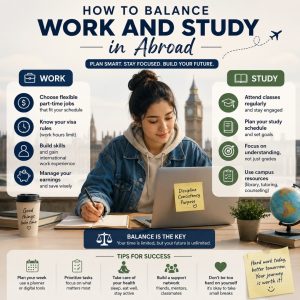
Many international students work part-time while studying abroad.
However, work rules differ depending on the country.
Some countries allow:
- 20 working hours weekly during school sessions
- Full-time work during holidays
Others may have stricter policies.
It is important to understand:
- Legal work limits
- Average student wages
- Job availability
- Tax rules
Do not assume you will easily find work immediately after arriving.
Mental and Emotional Preparation Matters
Studying abroad can be exciting, but it can also feel overwhelming.
Many students experience:
- Homesickness
- Loneliness
- Culture shock
- Academic pressure
- Financial stress
Moving to a new country means adjusting to:
- Different food
- New teaching systems
- Different weather
- New social environments
Being mentally prepared is just as important as financial preparation.
Check Post-Study Work Opportunities
Many students want to remain abroad temporarily after graduation to gain work experience.
Before choosing a destination, research:
- Post-study work permits
- Immigration pathways
- Job market demand
- Permanent residency options
Countries like Canada and Australia are popular partly because they offer clearer post-study work opportunities for international graduates.
University Rankings Are Not Everything
Students often become obsessed with rankings.
While rankings matter, they should not be your only focus.
A lower-ranked university with:
- Affordable tuition
- Strong career support
- Internship opportunities
- Better scholarship access
may be a smarter choice than an expensive top-ranked school you cannot comfortably afford.
Focus on value, not just reputation.
Improve Your English Communication Skills
Even students with strong test scores sometimes struggle with communication abroad.
Good communication affects:
- Academic performance
- Job interviews
- Networking
- Classroom participation
Practice:
- Speaking confidently
- Writing professionally
- Listening comprehension
Strong communication skills help students adapt faster.
Build a Long-Term Career Plan
Studying abroad should connect to your future goals.
Think beyond graduation.
Ask yourself:
- What career do I want?
- Which country has opportunities in my field?
- Will my degree be valuable globally?
- Can I afford student loans if necessary?
Students who plan long-term often make better decisions.
Beware of Fake Agents and Scams
Unfortunately, many fake agents target students who dream of studying abroad.
Be careful if:
- Someone guarantees visas
- An agent asks for suspicious payments
- Scholarship offers sound unrealistic
- There is pressure to act quickly
Always verify information from:
- Official university websites
- Embassy websites
- Trusted education organizations
Do proper research before paying anyone.
The Importance of Networking
One major advantage of studying abroad is networking.
The people you meet can shape your future career.
Build relationships with:
- Professors
- Classmates
- Alumni
- Industry professionals
Networking often leads to:
- Internships
- Job opportunities
- Research collaborations
- Career mentorship
Your network can become as valuable as your degree.
Adaptability Is Extremely Important
Life abroad rarely goes exactly as planned.
Flights may delay.
Housing may become stressful.
Part-time jobs may take time to find.
Students who adapt quickly usually succeed faster.
Flexibility, patience, and resilience are important qualities for international students.
Is Studying Abroad Worth It?
For many people, yes.
Studying abroad can completely transform a person’s career, mindset, confidence, and opportunities.
However, success does not happen automatically because you moved to another country.
The students who benefit the most are usually the ones who:
- Prepare properly
- Research carefully
- Stay disciplined
- Build useful skills
- Take opportunities seriously
Studying abroad is an investment, and like every investment, smart planning matters.
Final Thoughts
Making the decision to study abroad is exciting, but it should never be rushed. There is much more to consider beyond getting admission or posting travel pictures online.
You need to understand the financial realities, visa requirements, emotional adjustments, career opportunities, and long-term goals connected to international education.
The more informed your decision is, the better your experience will likely become.
Whether you plan to study in United States, Canada, United Kingdom, or any other destination, preparation remains the key to success.
A well-planned study abroad journey can open doors that change your life for years to come.