
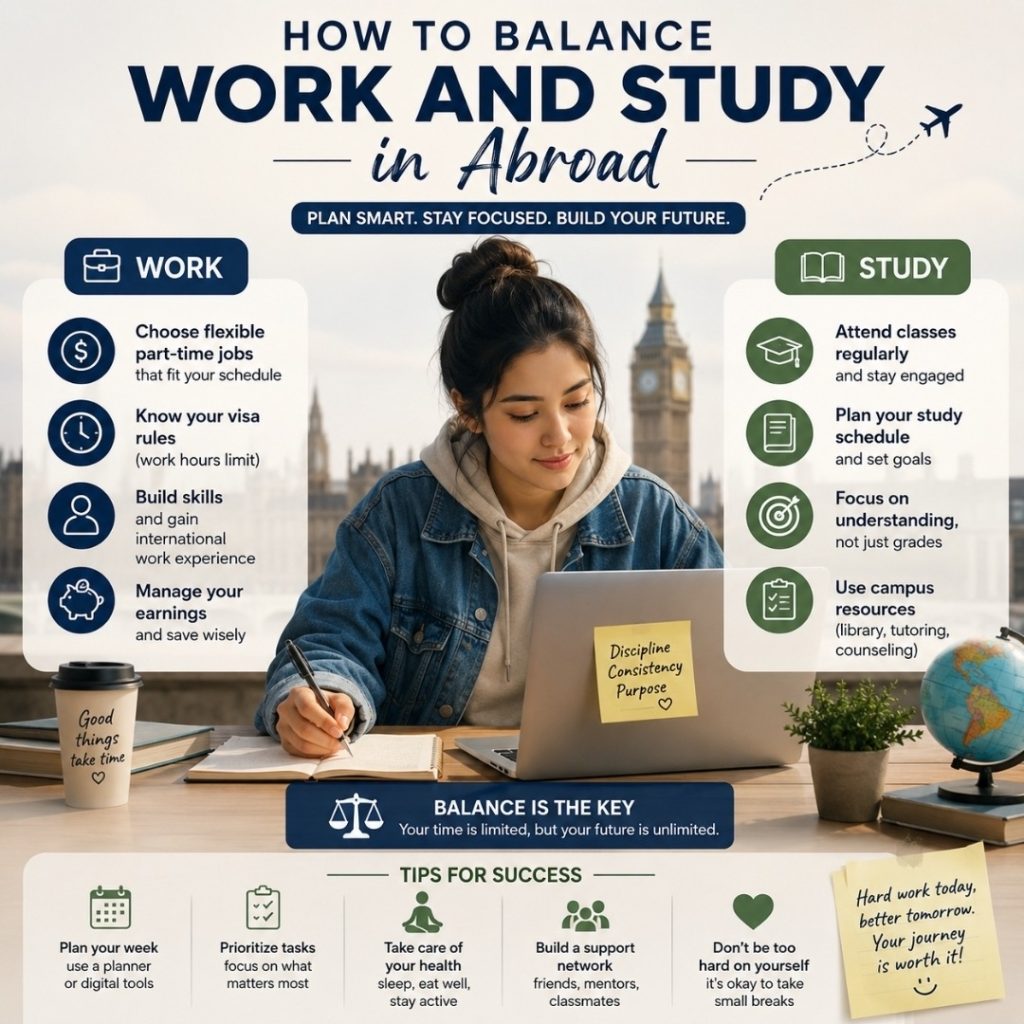
Moving abroad for studies is an exciting adventure filled with new opportunities, cultures, and experiences. But when you add part-time work into the mix, things can quickly feel overwhelming. Many international students, especially from Nigeria and other countries, face the daily challenge of juggling lectures, assignments, job shifts, and the desire to explore their new environment.
If you’re wondering how to balance work and study abroad without burning out or compromising your grades, you’re in the right place. I’ve seen countless students navigate this successfully, and the key is intention, smart planning, and self-compassion.
In this comprehensive guide, we’ll walk through realistic, proven strategies on how to balance work and study abroad. Whether you’re already there or preparing to go, these insights will help you thrive academically while building valuable work experience.
Why Learning How to Balance Work and Study Abroad Is Crucial
Studying abroad comes with unique pressures. You’re adapting to a new education system, cultural norms, and possibly financial responsibilities. Adding work hours—often limited by student visa rules—makes time management essential for success.
The benefits are huge: earning income reduces financial stress, gaining professional experience boosts your resume, and learning to juggle responsibilities builds lifelong skills. However, without proper balance, you risk poor grades, exhaustion, or missing out on the cultural immersion that makes studying abroad special.
Understanding how to balance work and study abroad starts with accepting that your studies come first. Work supports your goals, not the other way around. With the right approach, you can excel in both.
Understanding Visa Rules and Work Restrictions Abroad
Before diving into schedules, know the legal boundaries. Every country has different rules for international students.
Key points to research early:
- Maximum weekly work hours (often 20 hours during term time in places like the UK, Canada, or Australia).
- Permitted job types (on-campus vs. off-campus).
- Restrictions during holidays or breaks.
- Consequences of overworking, which can include visa issues.
Familiarize yourself with these details upon arrival or even before applying. This knowledge prevents unnecessary stress and helps you plan realistically when figuring out how to balance work and study abroad.
Creating an Effective Weekly Schedule
A solid schedule is the foundation of success when learning how to balance work and study abroad.
Start by mapping out your fixed commitments: class times, work shifts, and deadlines. Use digital tools like Google Calendar or a physical planner to visualize everything.
Steps to build your ideal schedule:
- Block out study time first, especially for deep work like assignments or exam prep.
- Schedule work shifts around your academic calendar.
- Include buffer time for travel, meals, and unexpected tasks.
- Build in regular breaks and rest days.
Many students find success with time-blocking: dedicating specific hours to focused activities. For instance, mornings for lectures and study, afternoons for work, and evenings for lighter revision or relaxation.
Here’s a sample weekly schedule table for a typical international student:
| Day | Morning (8-12) | Afternoon (1-5) | Evening (6-10) | Notes |
|---|---|---|---|---|
| Monday | Lectures & Tutorials | Library Study / Assignments | Light Revision or Rest | Focus on core subjects |
| Tuesday | Online Classes / Reading | Part-time Job Shift | Group Study Session | Prepare questions in advance |
| Wednesday | Lectures | Study Block (Deep Work) | Exercise or Social Time | Mid-week check-in |
| Thursday | Lab / Practical Sessions | Job Shift | Assignment Work | Use Pomodoro technique |
| Friday | Lectures / Review | Free / Flexible Work | Weekend Planning & Relaxation | Celebrate small wins |
| Saturday | Catch-up Study | Job Shift (if needed) | Explore City / Social | Recharge |
| Sunday | Rest & Meal Prep | Light Revision | Plan Next Week | Full rest if possible |
Adjust this based on your specific classes and job. The goal is consistency, not perfection.
Mastering Time Management Techniques
Effective time management is at the heart of how to balance work and study abroad.
Proven techniques that work well for busy students:
- Pomodoro Method: Study or work for 25 minutes, then take a 5-minute break. After four cycles, take a longer break. This combats fatigue during long study sessions.
- Prioritization: Use the Eisenhower Matrix to separate urgent and important tasks.
- Batch similar activities: Group similar tasks (e.g., all reading on one day) to maintain focus.
- Set realistic daily goals: Aim for 3-5 key tasks instead of an endless to-do list.
- Track your time: For one week, log how you spend your hours to identify time-wasters.
Tools like Notion, Todoist, or even simple phone reminders can make a big difference. The secret is finding what fits your personal rhythm.
Prioritizing Academics While Working
Your primary reason for being abroad is education. When figuring out how to balance work and study abroad, always protect your study time.
Practical academic strategies:
- Review course syllabi at the start of each semester and mark all deadlines.
- Start assignments early to avoid last-minute crunches.
- Form study groups with classmates for mutual support and accountability.
- Attend office hours and use university resources like writing centers or tutoring.
- Communicate with professors about your work commitments when necessary (without over-sharing).
Remember, strong academic performance often leads to better job opportunities and scholarships later.
Finding the Right Part-Time Job
Not all jobs are equal when trying to balance responsibilities. Choose wisely.
Tips for selecting student-friendly work:
- Look for flexible roles like retail, hospitality, campus jobs, or tutoring.
- Seek positions related to your field for valuable experience.
- Negotiate shifts that don’t conflict with classes.
- Start with fewer hours and increase gradually as you adapt.
On-campus jobs are often ideal because they’re convenient and understanding of academic demands.
Maintaining Health and Preventing Burnout
This is one of the most overlooked aspects of how to balance work and study abroad. Your health directly impacts your performance.
Essential self-care habits:
- Prioritize sleep — aim for 7-8 hours nightly.
- Eat nutritious meals and stay hydrated.
- Incorporate regular exercise, even short walks.
- Schedule downtime for hobbies, exploring, or socializing.
- Practice mindfulness or journaling to manage stress.
Watch for burnout signs like constant fatigue, irritability, or declining grades. Take proactive steps to rest when needed.
Building a Support System Abroad
You don’t have to do this alone. A strong support network makes balancing everything much easier.
Ways to build connections:
- Join student clubs or societies related to your interests.
- Connect with fellow international students who understand your challenges.
- Stay in touch with family and friends back home, but set boundaries.
- Utilize university counseling services if stress becomes overwhelming.
- Find a mentor — perhaps a senior student or advisor.
Sharing experiences with others who are also learning how to balance work and study abroad provides encouragement and practical advice.
Handling Cultural and Practical Challenges
Living abroad brings unique hurdles that affect your work-study balance.
Common challenges and solutions:
- Culture shock and homesickness: Combat this by gradually building routines and exploring local culture.
- Language barriers: Practice daily and seek language exchange partners.
- Financial management: Create a detailed budget covering rent, food, transport, and emergencies.
- Different academic expectations: Adapt to independent learning styles common in many countries.
- Weather and environment adjustments: Plan activities around local conditions.
Being patient with yourself during the adjustment period is vital.
Maximizing Productivity and Efficiency
Once your basic structure is in place, focus on working smarter.
Advanced tips for higher productivity:
- Minimize distractions by creating a dedicated study space.
- Use apps to block social media during focus times.
- Prepare meals in advance to save time and money.
- Combine activities where possible, like listening to educational podcasts during commutes.
- Review your weekly schedule every Sunday and make adjustments.
Small efficiency gains add up to significant time savings over a semester.
Long-Term Strategies for Sustainable Balance
How to balance work and study abroad isn’t just about surviving one semester — it’s about building habits that last.
Review your progress monthly. Celebrate achievements, no matter how small. Adjust your approach as you gain confidence. Many students find that by the second semester, balancing becomes more natural.
Consider how your work and studies align with your long-term career goals. This perspective helps maintain motivation during tough weeks.
Common Mistakes to Avoid
Even well-intentioned students sometimes slip up. Here are pitfalls to watch for:
- Overcommitting to work hours early on.
- Procrastinating on assignments until deadlines loom.
- Neglecting social life completely or over-socializing.
- Ignoring visa regulations.
- Comparing your journey to others on social media.
Learning from these mistakes helps you refine your approach to how to balance work and study abroad.
Your Action Plan: Getting Started Today
Ready to put these ideas into practice? Here’s a simple starter plan:
- Week 1: Map out your current schedule and identify one improvement area.
- Daily: Use time-blocking and take regular breaks.
- Weekly: Review progress and plan the next week.
- Monthly: Assess overall balance and make bigger adjustments.
- Ongoing: Prioritize self-care and seek support when needed.
Consistency is more important than perfection. Start small and build from there.
Balancing work and study while abroad is challenging but incredibly rewarding. You’re not only gaining a degree but also developing resilience, adaptability, and real-world skills that will serve you for life.
You’ve already taken a brave step by studying abroad. With these strategies on how to balance work and study abroad, you’re well-equipped to make the most of this experience. Stay focused on your goals, be kind to yourself, and enjoy the journey.
What’s one tip you’re excited to try first? Share in the comments below — I’d love to hear your thoughts and experiences.
For more detailed advice on managing finances and work as an international student, check this helpful guide on part-time work for international students. And explore practical balancing tips from IFSA Study Abroad.